
Complete Women’s Health Visit
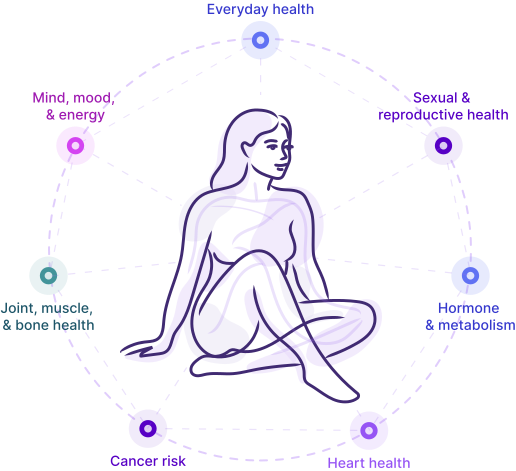
More than just a checklist, the Complete Women's Health Visit connects how you're feeling today with your future health risks and long-term health goals. By looking at seven key areas of health, we help you see the bigger picture.
As part of your insurance plan, your visit may be at no cost to you.
One annual visit.
More answers.
%400.5x.png)
This visit may be at
no cost to you
The Complete Women’s Health Visit is billed as preventive care. Many insurance plans cover one preventive women’s health visit each year, often at no out-of-pocket cost.
Finally feel
heard

What patients are telling us

Patients would return for future care

Left with all or most of their concerns addressed

Felt comfortable bringing up every concern
Bring us
the
concerns
you've
been collecting
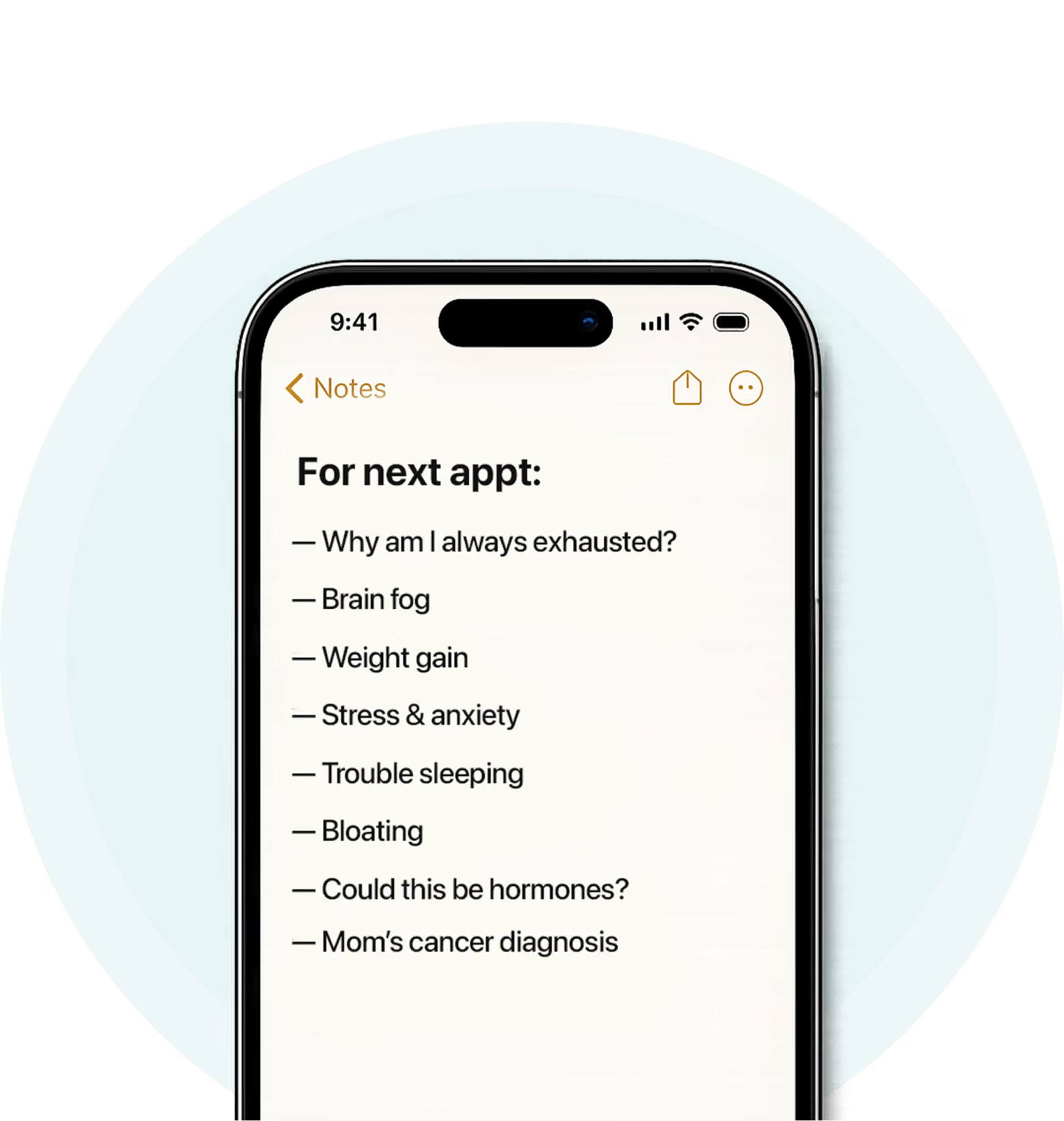
Your symptoms are often connected — even ones you may not think are important. That’s why the Complete Women’s Health Visit makes space for them.
Go beyond
"everything
looks
normal"
Too many women have been told their labs are normal and sent on their way — even though something still feels wrong. Your provider may recommend advanced labs to help you get to the bottom of your issues.

Typical thyroid screening often starts with TSH. When symptoms or history suggest a deeper look is needed, your provider may recommend additional testing to better understand thyroid function and possible autoimmune thyroid disease.
May include:
- TSH
- Free T4*
- Free T3*
- TPO antibodies*
- Thyroglobulin antibodies, or TgAb*
These tests may help evaluate symptoms like fatigue, weight changes, mood shifts, irregular periods, temperature sensitivity, or changes in hair and skin.

A CBC looks at the cells in your blood, including red blood cells, white blood cells, and platelets. Your provider may recommend it to help evaluate fatigue, dizziness, heavy periods, frequent infections, unusual bruising, or low energy.
May help identify:
- Anemia or blood-count changes
- Signs of infection or inflammation
- Changes in white blood cells or platelets
- Results that may need follow-up

Vitamin D supports bone, muscle, immune, and overall health. Your provider may recommend testing if you have symptoms or risk factors for low vitamin D, or if fatigue, muscle aches, bone health, or long-term preventive health are part of your care plan.
May help evaluate:
- Low vitamin D levels
- Bone and muscle health
- Possible contributors to fatigue or body aches
- Whether supplementation may be appropriate

A comprehensive cardiometabolic panel can help your provider understand important signals tied to energy, weight changes, metabolism, and long-term risks like diabetes and cardiovascular disease.
May include:
- Comprehensive metabolic panel, which looks at glucose, electrolytes, calcium, protein levels, liver function, and kidney function
- Hemoglobin A1C
- Fasting insulin*
A1C gives a picture of average blood sugar over the past few months. Fasting insulin can offer additional insight into how hard your body may be working to keep blood sugar stable, especially if your provider suspects insulin resistance is part of the picture.

A standard cholesterol panel can show important markers of heart health, but additional lipid testing can help clarify risk when results, family history, or other health factors suggest a closer look is needed.
- Total cholesterol
- LDL cholesterol
- HDL cholesterol
- Triglycerides
- ApoB*
If LDL cholesterol or overall risk is elevated, your provider may recommend follow-up testing such as:
- Lp(a)*
- Coronary artery calcium score, or CAC*
These tests can help your provider better understand cardiovascular risk and determine whether additional prevention steps may be appropriate.
*Advanced labs are recommended when they make sense for your symptoms, health history, or risk factors. Coverage varies by plan, and out-of-pocket costs may apply.
Explore
better
screening
options
Today's screening recommendations are more personalized — and often more convenient — than many women realize. Your provider can help determine which screenings make sense for you and the best way to complete them.
Breast cancer
Beyond mammograms, factors like family history and genetic risk can help guide screening recommendations.
Cervical cancer & HPV
Depending on your age and history, screening may include Pap testing, HPV testing, or self-collection options.
Colon cancer
Many women can begin screening with an at-home test before determining whether additional testing is needed.
Do I need a pelvic exam?
No, you don't need a pelvic exam at every annual visit — but you should still see your provider every year.
For women who aren't pregnant, having symptoms, or at higher risk, there's little evidence that routine pelvic exams help. That's why ACOG recommends them only when your symptoms or health history call for one.
1.
We ask before we recommend anything. We'll review your symptoms, health history, and past screenings, then decide together whether you need a pelvic exam, Pap test, HPV test, or other screening. For most women over 30, Pap tests are only every 3–5 years — and HPV screening can often be done with a self-swab, no exam required.
2.
If you do need an in-person exam, we'll help you find one. Our care coordinators connect you with a high-quality provider near you.
3.
We never examine you virtually. We don't do pelvic exams over video, and we'll never ask you to show your vagina on camera or send photos.
Frequently asked questions
It is an annual preventive visit designed to give you more time with a women’s health provider. You can talk through your health history, symptoms, screenings, labs, and next steps in one visit.
Your initial visit may be up to 45 minutes, giving you more time to discuss what is going on in your body and what preventive care may make sense for you.
Yes. Symptoms and concerns are part of this visit. You can talk about fatigue, mood, stress, sleep, painful periods, hormone changes, weight changes, sexual health, menopause symptoms, and other concerns.
Your provider reviews 7 areas: cancer risk, everyday health, mind, mood and energy, sexual and reproductive health, heart health, hormones and metabolism, and musculoskeletal health.
Not always. Your provider will review your age, symptoms, medical history, and past screening results to determine whether you’re due for a pelvic exam, Pap test, HPV test, or other screening. If in-person care is recommended, our care team can help coordinate next steps.
Most insurance plans include one preventive visit each year. Visana bills the Complete Women’s Health Visit as preventive care. Your exact cost depends on your insurance plan and whether you have already used your annual preventive visit for the year.
Yes, in some cases. Costs may apply if:
- You already had an annual preventive visit in the last 12 months
- Your provider recommends labs or screenings that are not fully covered by your plan
- You schedule a follow-up visit after your annual visit
- Your provider recommends an in-person visit for care that can’t be completed virtually, such as a Pap test
Visana bills the Complete Women’s Health Visit as preventive care. You can bring up symptoms during the visit. If your provider recommends labs, screenings, or a separate follow-up visit, those services may have their own costs depending on your plan.
A follow-up visit is separate from your annual preventive visit. Your plan’s standard copay, deductible, or out-of-pocket costs may apply to that follow-up visit.
If you already had an annual preventive visit in the last 12 months, your Complete Women’s Health Visit may not qualify as preventive under your plan. But you can still see a Visana provider for a regular visit. We accept insurance and can help address symptoms, questions, or ongoing health concerns. Your plan’s standard copay, deductible, or out-of-pocket costs may apply.
You may be able to use HSA or FSA funds for eligible costs. Check your plan details to confirm what applies to you.
You can contact billing@visanahealth.com with questions about billing, insurance changes, or self-pay options.
Your Complete Women's Health Visit is covered at no cost to you when completed annually through your eligible health plan. Certain labs, prescriptions, screenings, or follow-up care may be subject to standard plan coverage and out-of-pocket costs. If you have already completed a preventive visit within the last 12 months, or have a high-deductible health plan, additional costs may apply. Please review your plan documents for details on covered and non-covered benefits.